Only about 6% of NDIS participants qualify for Specialist Disability Accommodation, yet for those who do, the right home is the foundation of a self-directed life. It is often a quiet realisation when the current family home no longer provides the safety or accessibility your loved one deserves. You might feel lost in a sea of NDIS jargon or fear that moving means trading a warm home for a clinical environment. It is natural to worry about how a new suburb in Melbourne will embrace your family member.
We understand that you want a solution that feels like a home, not an institution. This guide explains the SDA eligibility criteria Victoria requires in 2026, ensuring you understand exactly how to qualify and what high safety standards you should demand for your loved one. We will break down the four design categories, the latest 2026 updates to the Residential Tenancies Act, and how to identify a provider that prioritises dignity over administrative checklists. By the end, you will have a clear framework to steady your family’s future with confidence and peace of mind.
Key Takeaways
- Identify the two primary eligibility pathways, focusing on how the NDIS assesses “extreme functional impairment” and “very high support needs” for Victorian participants.
- Gain a clear understanding of the SDA eligibility criteria Victoria requires in 2026, including the latest legal protections now available under the Residential Tenancies Act.
- Discover the four SDA design categories to ensure your loved one’s home balances high-level safety standards with a warm, non-clinical atmosphere.
- Use a structured framework to evaluate Melbourne-based providers, prioritising those with a proven history of NDIS compliance and rigorous property upkeep.
Understanding SDA Eligibility Criteria in Victoria
Eligibility for Specialist Disability Accommodation isn’t just a hurdle; it’s a doorway to independence. The focus is simple. Under the National Disability Insurance Scheme (NDIS), the SDA eligibility criteria Victoria families must meet focus on two distinct pathways. The first is “extreme functional impairment,” where physical or cognitive challenges make daily tasks like mobility or self-care nearly impossible without specialised housing. The second is “very high support needs,” which applies when a participant requires constant, high-level care that can only be safely managed in a purpose-built environment.
The NDIS determines if specialist disability accommodation is “reasonable and necessary” by looking at your long-term goals. Only about 6% of participants qualify. This rigorous process ensures that funding goes toward homes that truly steady a life. Safety standards act as the foundation for this stability. The NDIS Quality and Safeguards Commission mandates provider registration to protect Victorian families, ensuring every home meets strict benchmarks. Confidence grows when these standards are met.
The Functional Impairment Test for Victorians
Assessing your loved one’s ability to navigate their world is a delicate process. Routine becomes difficult when a home doesn’t match a person’s physical requirements. The NDIS looks closely at mobility, self-care, and self-management skills. Your occupational therapist’s report is the most critical document here. It provides the professional evidence needed to prove that a standard home cannot meet these complex needs. A detailed, person-centred report often makes the difference between a rejection and an approval.
Victorian Safety Regulations and the NDIS Framework
In Melbourne, safety is multi-layered. New SDA properties must comply with local council regulations and Victorian fire safety codes, which often exceed national standards. Since the changes to the Victorian Residential Tenancies Act 1997 in July 2026, residents have even greater protections. Verifying a provider’s registration is essential. It confirms they are accountable to both state and federal authorities, keeping the focus on a safe, fulfilling environment. This structured oversight ensures that SDA eligibility criteria Victoria standards translate into real-world security.
The Four SDA Design Categories: Safety Standards Explained
Every home should feel personal. It should be a place where routine is easy and safety is a quiet, reliable presence in the background. The NDIS Specialist Disability Accommodation Guideline outlines four distinct design categories. Each category is built to address specific challenges while ensuring the environment remains warm and non-clinical. Understanding these categories is a vital part of meeting the SDA eligibility criteria Victoria requires for your loved one’s specific plan.
- Improved Liveability: These homes support people with sensory, intellectual, or cognitive impairments. Features include enhanced luminance contrast to help with navigation and clear lines of sight to reduce stress.
- Robust: Resilience is the focus here. These properties use high-impact resistant materials and soundproofing to protect residents and support teams, ensuring the home remains a calm sanctuary.
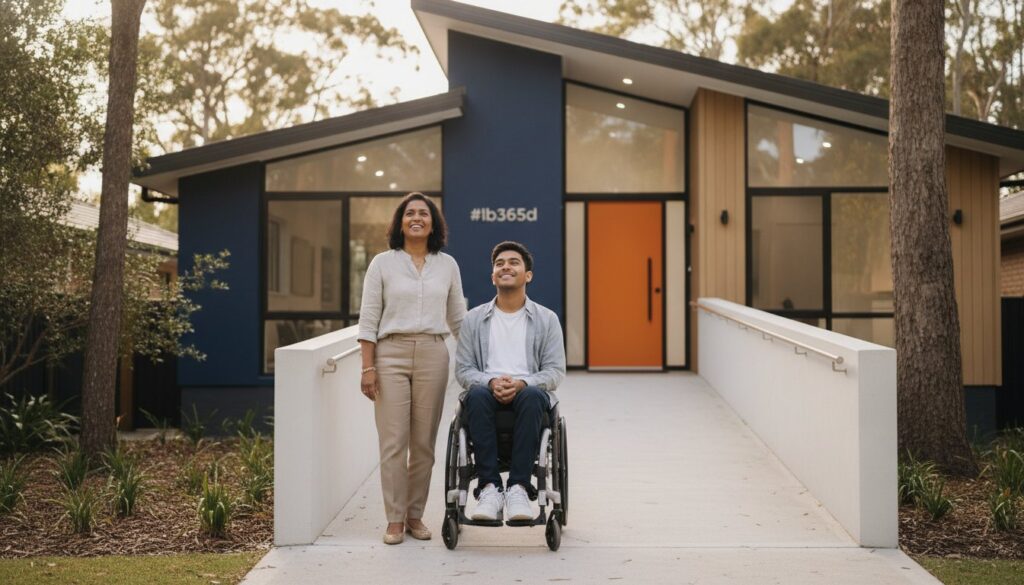
- Fully Accessible: Designed for people with significant physical impairments, these layouts feature wide doorways and specialised kitchen and bathroom heights to allow for effortless wheelchair use.
- High Physical Support: This category provides the highest level of structural intervention. High Physical Support housing requires emergency communication technology and backup power systems to ensure safety during utility failures or medical crises.
Physical Safety Features to Look For
Detailed safety starts with the small things. Slip-resistant flooring and reinforced walls for future grab rails are essential for long-term stability. Clear circulation spaces allow for fluid movement without obstacles. Automated doors and environmental control systems increase autonomy, letting residents manage their own space with confidence. These features ensure that independence is protected by a steady, structured environment. If you feel overwhelmed by these technical requirements, exploring local Melbourne options can help you see how these standards look in a real home.
The Synergy Between SDA and SIL
A house is just a shell without the right support. While SDA covers the physical building, supported independent living Melbourne providers deliver the personal care within it. The design of the home must allow support workers to provide assistance discreetly, ensuring the resident’s dignity is always preserved. When the building and the service work together, the result is a fulfilling life. Matching the right support to the SDA eligibility criteria Victoria requires is the key to creating a home that truly serves the individual.

Choosing a Safe SDA Provider in Melbourne: A Checklist
Finding a home is a deeply personal journey. Once you understand the SDA eligibility criteria Victoria requires, the next step is finding a partner you can trust. It isn’t just about four walls and a roof. It’s about the people who maintain those walls. Start by verifying the provider’s registration with the NDIS Quality and Safeguards Commission. This ensures they are held to national standards of safety and accountability. A provider with a clear history of compliance offers a steady foundation for your loved one’s future.
Maintenance matters. Safety is only as good as the upkeep of the property. In larger facilities, this often extends to the professional office cleaning melbourne required for on-site administrative and staff spaces. Ask to see a provider’s maintenance schedule. A reliable provider will have a local Melbourne team ready to respond to emergencies in suburbs like Tarneit or Dandenong. Beyond the technical, look for a homely atmosphere. A house should feel like a residence, not a ward. If the environment feels clinical or cold, it may not support a fulfilling, self-directed life. Routine becomes easier when the space feels personal.
Questions for Your Melbourne Site Visit
Walk through the home with a critical eye. Ask how they manage emergency evacuations for participants with high physical support needs. Inquire about the process for reporting a safety concern or requesting a modification if needs change. It’s also vital to ask how the provider will organise development of life skills within the home. A safe home should be a place of growth, not just a place of residence. Confidence grows in a structured environment.
The WithCare Approach to Safe, Dignified Living
At WithCare, we provide a steady hand. We believe that meeting the SDA eligibility criteria Victoria sets is just the beginning of the story. Our commitment is to offer assistance with daily life NDIS participants can rely on, prioritising the individual spirit over administrative checklists. We ensure our environments are structured and safe but always personal and warm. You deserve a partner who values dignity as much as safety. Partner with a Melbourne provider who prioritises safety and dignity; contact WithCare today.
Securing a Future of Dignity and Safety
Finding the right home is about more than just physical modifications. It is about creating a space where your loved one feels autonomous and respected. You now have a clearer understanding of the SDA eligibility criteria Victoria demands in 2026, from the technical design categories to the essential safety benchmarks that keep a household running smoothly. By focusing on a steady hand approach, you can ensure that support remains in the background while your family member’s spirit stays at the centre of their daily life. Routine becomes easier when the environment is right.
As a registered NDIS provider with a dedicated Melbourne-based team, we understand the local landscape from Tarneit to Geelong. We are committed to providing non-clinical, person-centred care that transforms a house into a fulfilling home. You don’t have to navigate these complex requirements alone. Our team is ready to provide the structured, reliable support your family deserves, ensuring every transition is handled with quiet confidence.
Partner with a Melbourne provider who prioritises safety and dignity; contact WithCare today.
The path forward is one of quiet confidence and renewed independence. We are here to help you steady the course and build a future where your loved one can truly thrive.
Frequently Asked Questions
What is the difference between SDA and SIL eligibility in Victoria?
SDA funding covers the physical building, while SIL funding pays for the support workers who assist you inside it. To meet the SDA eligibility criteria Victoria requires, you must demonstrate a need for a specialised physical environment due to extreme functional impairment. SIL is much more common and focuses on your daily routine, such as help with cooking or personal care. You can have SIL funding without qualifying for SDA, but those with SDA almost always have a SIL package to ensure they are supported safely in their new home.
Do all SDA homes in Melbourne need to be brand new builds to meet safety standards?
No, a home doesn’t have to be brand new to be safe or compliant. While many new builds in Melbourne suburbs are designed to the latest 2026 standards, existing properties can be refurbished to meet the SDA Design Standard. These are often called “legacy” or “refurbished” properties. Every home, regardless of its age, must be registered with the NDIS and pass rigorous inspections to ensure it provides a steady, secure environment that prioritises your loved one’s dignity.
How do I report a safety or maintenance concern with my current SDA provider in Victoria?
You should first contact your provider directly through their internal maintenance or complaints process. Professional providers have a structured system for tracking repairs and safety issues. If the concern isn’t resolved or you feel the resident is at risk, you can lodge a complaint with the NDIS Quality and Safeguards Commission. Remember that since July 2026, Victorian SDA residents have increased protections under the Residential Tenancies Act, giving you more power to ensure your home is kept in reliable, safe condition.
Can I request specific safety modifications to an SDA home after I move in?
Yes, you can request modifications if your physical or sensory needs change over time. These changes must be assessed by an Occupational Therapist and submitted to the NDIS for approval as “reasonable and necessary” supports. Your provider should work with you as a partner to ensure the home remains a personal and fulfilling space. This flexibility is essential for maintaining independence, as it allows the environment to adapt to your life rather than forcing you to adapt to the building.