Imagine walking into a home that doesn’t just accommodate a wheelchair, but actually anticipates your next move. It isn’t a sterile facility or a hospital ward; it’s a personal sanctuary where technology hums quietly in the background to keep you in control. For many families, the search for high physical support SDA is often clouded by the fear that a house will feel more like an institution than a home. You want safety, but you also want soul.
We understand that the transition to specialised housing can feel overwhelming, especially when you’re worried about being treated like a number in a cold, clinical system. It’s natural to feel confused about the difference between the physical building and the actual care provided. This guide is designed to clear that fog. You’ll discover how high physical support SDA provides the structural foundation and assistive technology needed for a life of dignity and independence. We will walk through the essential features of these homes, explain the 2026 eligibility pathway, and help you find a provider who values your spirit as much as your safety.
Key Takeaways
- Understand how HPS design prioritises your dignity by removing physical barriers through advanced, unobtrusive assistive technology.
- Learn the specific evidence required for high physical support SDA funding, focusing on how to document extreme functional impairment effectively.
- Discover why a professional assessment is the essential first step in demonstrating a need for the highest level of specialised housing.
- Clarify the vital distinction between your physical dwelling and the personal support services that allow your independence to flourish.
- Gain confidence in finding a partner who organises support around your individual spirit rather than just an administrative checklist.
Defining High Physical Support SDA: Design Standards and Life-Changing Features
High Physical Support (HPS) represents the most advanced tier of specialist disability accommodation. It is carefully crafted for individuals living with an extreme functional impairment. While other housing categories focus on basic accessibility, high physical support SDA is built around the philosophy that your environment should never be a barrier to your dignity. The focus is simple. We want to ensure that the home feels like a personal sanctuary rather than a medical facility. Unlike “Fully Accessible” housing, HPS includes specific structural provisions for ceiling hoists and emergency power, ensuring that even the most complex needs are met with a steady, reliable hand. This framework is a core part of the National Disability Insurance Scheme (NDIS), providing a structured path toward true independence.
Structural Requirements for Extreme Functional Impairment
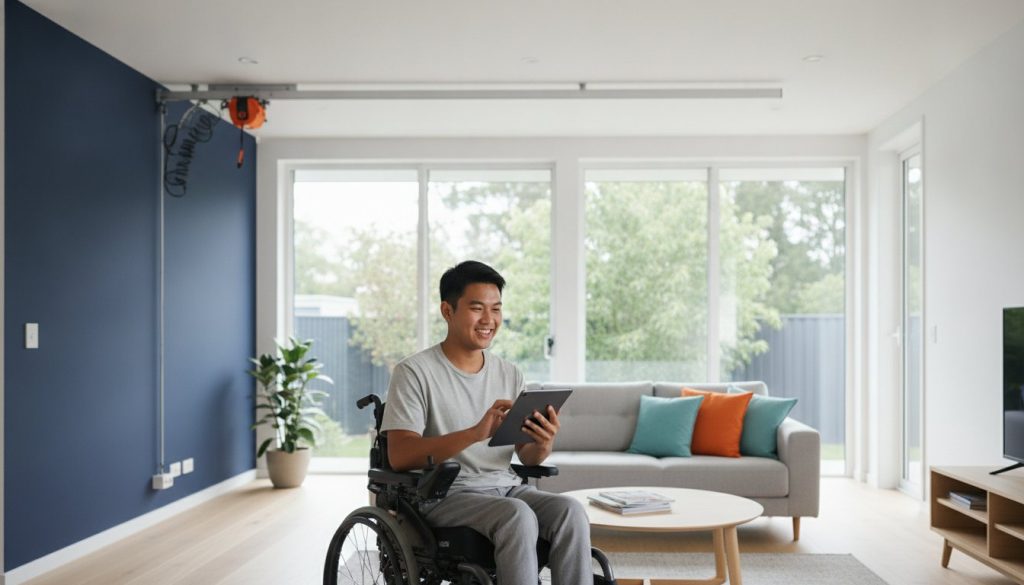
The physical bones of these homes are reinforced to handle the rigours of daily life. Ceilings are strengthened during the build to support complex hoist systems, allowing for safe and dignified transfers. Doorways and hallways are wider than standard designs, providing ample room for large electric wheelchairs or mobility scooters for sale brisbane to glide through without friction. In the kitchen and bathroom, clear floor spaces allow for full 360-degree manoeuvrability, ensuring that every corner of the home remains accessible and personal. These details are subtle but vital for maintaining a self-directed life.
Assistive Technology and Emergency Provisions
Technology in an HPS home acts as a quiet, supportive background. Integrated home automation allows you to control lights, blinds, and doors with minimal physical effort, putting autonomy back in your hands. Reliable communication systems ensure that help is always within reach without being intrusive. Crucially, high physical support SDA properties must include mandatory backup power systems. This ensures that life-sustaining equipment stays operational during an unexpected outage, providing a sense of safety that is both structured and deeply comforting for the entire family. In an age where such technology is so deeply integrated, ensuring digital resilience is vital; organisations like CyberOne highlight that a rapid response to any technical or security incident is essential for protecting the infrastructure we rely on.
Navigating the Eligibility Process for High Physical Support Funding
The need for specialised housing often arrives quietly. It begins when routine becomes difficult and the familiar layout of a family home starts to feel like a series of obstacles. Confidence slips. This transition is deeply personal, and acknowledging that your current environment no longer provides the safety you deserve is the first step toward a more fulfilling life. To access high physical support SDA, the NDIS requires a structured body of evidence that demonstrates an “extreme functional impairment” or “very high support needs.”
Securing funding involves meeting the criteria outlined in the SDA Rules 2020, which govern how the NDIA assesses each application. Beyond the physical requirements, the agency looks for “Value for Money.” They want to see that investing in a specialised building will lead to better long-term outcomes, such as reduced reliance on emergency medical care or a significant increase in your personal autonomy. If you feel overwhelmed by the paperwork, you might find it helpful to speak with a team that understands the nuances of these applications.
Understanding “Significant Physical Impairment” Criteria
To qualify, your evidence must show a complete or near-complete loss of ability to perform essential self-care tasks. This includes documenting the need for frequent, high-intensity support that spans both day and night. In 2026, the NDIA assesses very high support needs by measuring the frequency and complexity of person-to-person assistance required to maintain your safety and dignity in a domestic setting. This documentation ensures that high physical support SDA funding is directed to those who require the most robust structural interventions.
The Role of the Occupational Therapist in Your SDA Application
A specialised assessment from an Occupational Therapist (OT) is the most critical piece of your NDIS SDA eligibility evidence. The OT will map your daily routine in detail, proving why standard housing is no longer safe or sustainable for your specific needs. They work alongside your Support Coordinator to ensure the application is structured correctly, focusing on how a specialised environment will steady your life. This collaborative approach ensures the “spirit” of the individual remains at the centre of the clinical process.

Beyond the Bricks and Mortar: The Synergy of SDA and SIL in Melbourne
A house is just a shell without the right people inside it. While the physical features of high physical support SDA provide the foundation for safety, it is the quality of care that truly steadies a life. The synergy between your dwelling and your daily support is what transforms a specialised building into a fulfilling home. At WithCare Support Services, we specialise in organising Supported Independent Living Melbourne within these high-tech environments. We believe care should feel organised but never clinical. By planning your transition with a reliable partner, you can avoid the “crisis” feel that often accompanies a move, ensuring your new chapter begins with quiet confidence.
Why High Physical Support Requires a Steady Hand in Care
Living in an HPS environment means interacting with complex assistive technology every day. It’s essential that your support workers are thoroughly trained in these specific systems so that help remains in the background, not the foreground. We balance the need for 24/7 onsite support with your fundamental right to a private, self-directed life. Our approach is to be a professional presence that remains unobtrusive. We’re there when you need us, but we respect the personal boundaries that make a house feel like your own. This balance ensures your independence is supported, not overtaken.
Finding HPS Vacancies in Melbourne and Geelong
Finding the right home involves looking beyond the floor plan. We support families across Tarneit, Geelong, and Greater Melbourne to find vacancies that align with their personal goals. When you visit a potential site, look for signs of a “fulfilling” life rather than an institutional one. Consider these factors during your visit:
- Does the home have a warm, personal aesthetic that reflects the residents’ spirits?
- Is the assistive technology integrated seamlessly into the design?
- How does the support team interact with residents in common areas?
If you’re ready to explore current or upcoming high physical support SDA opportunities, the next step is a simple conversation. We can help you navigate the local market with a steady hand and a clear, structured plan for the future.
Steadying the Path Toward Your New Home
Finding the right living environment is a journey that requires both structural precision and a deeply personal touch. We’ve explored how high physical support SDA provides the essential technology and reinforced design needed to ensure your safety remains quietly in the background. From navigating the rigorous NDIS eligibility pathway to understanding how specialised housing works in harmony with daily care, the focus remains simple. It’s about preserving your spirit and your right to a self-directed life.
Confidence grows when you have the right partner. As a Registered NDIS Provider, WithCare Support Services is specialised in Supported Independent Living (SIL) and dedicated to a person-first approach. We believe that your home should be a place where routine never becomes a barrier to your dignity. Support is structured. It’s reliable. Yet, it always remains unobtrusive. If you’re ready to move beyond clinical checklists and find a home that truly feels fulfilling, we’re here to guide you. Please speak with our empathetic team about HPS SDA and SIL in Melbourne to discuss your future.
The transition to a new way of living doesn’t have to be a crisis. With a steady hand beside you, it becomes a beautiful opportunity for independence to flourish.
Frequently Asked Questions
What is the main difference between Fully Accessible and High Physical Support SDA?
The main distinction lies in the structural capacity for complex equipment and emergency safety. While Fully Accessible homes focus on physical access for wheelchairs, high physical support SDA properties are built with reinforced ceilings to support hoist systems. They also include provisions for sophisticated home automation and mandatory backup power. These features ensure that those with extreme functional impairment can maintain their dignity through reliable, background technology that anticipates their needs.
Can I live with my partner or family in a High Physical Support SDA home?
You can certainly live with your partner or family members in a specialised home. The NDIS recognises the importance of maintaining personal relationships and family unity. While the SDA funding covers the participant’s housing costs, family members or partners may contribute a reasonable rent contribution. It’s important to discuss these arrangements with your provider early to ensure the home’s layout comfortably accommodates your entire household while meeting your specific support requirements.
How do SDA payments work for High Physical Support housing in 2026?
In 2026, SDA payments are managed through a structured system where the NDIA pays the housing provider directly. As a participant, you’ll typically make a Reasonable Rent Contribution, which is capped at a percentage of your Disability Support Pension plus any Commonwealth Rent Assistance. This ensures that high physical support SDA remains affordable and accessible. The funding is tied to your specific needs and the design category of the building, providing a steady foundation for your housing security.
What happens if there is a power outage in a High Physical Support home?
Safety is the priority, so every HPS home must have a reliable backup power system. If a blackout occurs, these systems automatically kick in to keep life-sustaining equipment, hoists, and communication devices operational. This isn’t just a clinical requirement; it’s a promise of safety that allows you and your family to rest easy. Your support team is also trained to manage these transitions quietly, ensuring your routine remains as undisturbed as possible during an outage.