
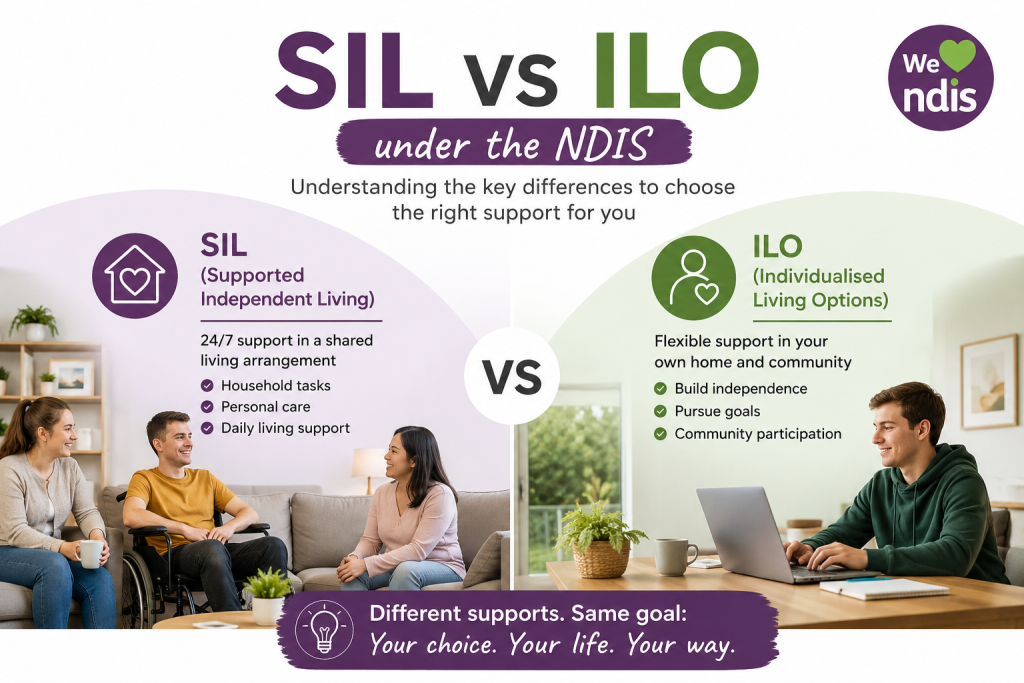
The most important part of your NDIS plan isn’t the funding amount; it’s the feeling of a front door key in your hand. When you’re weighing up SIL vs ILO NDIS options in Melbourne, it’s easy to feel like your life is being reduced to a series of administrative checklists and budget lines. You want a home that offers stability without stripping away your autonomy. The steady hand of support should feel like a background hum that keeps life running smoothly, not a clinical presence that dictates your every move. It’s about finding that delicate balance between being looked after and being truly free.
We understand the quiet anxiety that comes with choosing a living arrangement, especially when the terminology feels designed to confuse rather than clarify. You might worry about losing control or simply feeling like another number in a bureaucratic system. As regulations shift, such as the requirement for all SIL providers to be registered by 1 July 2026, finding a reliable partner is more vital than ever. This guide provides a clear decision-making framework to help you choose the support that feels like home. We’ll break down the differences between the structured Roster of Care and the bespoke Exploration and Design process. By the end, you’ll have the confidence to select a path that offers both reliability and a self-directed life.
Key Takeaways
- Recognise how a structured Roster of Care in SIL offers a reliable foundation for those who feel most secure with consistent, 24/7 onsite support.
- Explore how the Exploration and Design phase of ILO allows you to build a custom living arrangement tailored to your specific community and lifestyle needs.
- Use our decision-making framework for SIL vs ILO NDIS to move past bureaucratic jargon and focus on what will truly make your house feel like a home.
- Learn how an empathetic transition plan can turn a move into a natural next step, maintaining your independence throughout the process in Melbourne and beyond.
Understanding SIL and ILO: Two Paths to Independence
NDIS acronyms often feel cold and detached. We’re here to translate them into real-life outcomes. Choosing between SIL vs ILO NDIS isn’t just a funding decision; it’s a lifestyle one. The National Disability Insurance Scheme (NDIS) framework provides these two distinct paths to help you find your feet. One path offers a steady, pre-structured environment. The other is a bespoke journey you design yourself. The fundamental difference lies in the structure: SIL is a ‘ready-to-go’ model, while ILO is ‘built-from-scratch’. Understanding the nuances of SIL vs ILO NDIS is the first step toward a self-directed life.
What is Supported Independent Living (SIL)?
This model is designed for participants with higher support needs who require a steady presence throughout the day and night. Routine becomes a source of confidence here. Supported Independent Living (SIL) is a 24/7 onsite support model that helps participants manage daily tasks while building life skills. It commonly involves living with housemates. This shared approach helps reduce individual costs while building a natural social circle within the home. It’s a structured way to ensure safety and dignity are always in the background of a fulfilling life.
What are Individualised Living Options (ILO)?
For those who don’t need constant onsite care, Individualised Living Options (ILO) offer a flexible alternative. It’s about personal choice. You decide where you live and who you live with. This process begins with ‘Exploration and Design,’ a phase where you work out exactly how your life should look before any support starts. It blends formal services with informal supports, like living with a host family or having a neighbour provide occasional help. It’s a customised arrangement built to mirror your specific spirit and independence.
SIL vs ILO NDIS: Which Support Model Suits Your Lifestyle?
Decisions about where you live are deeply personal. They shouldn’t feel like a compromise. When comparing SIL vs ILO NDIS, the right choice usually comes down to how much structure you want in your daily life. Some people thrive in a community setting where professional support is always present in the background. Others prefer a bespoke arrangement that they build from the ground up with family and friends. Both models prioritising your dignity, but they deliver it in very different ways. Choosing a structured model doesn’t mean you lose your voice. It simply means you gain a reliable team to help you project it.
When to Choose SIL: Stability and Shared Community
SIL is often the preferred choice if you enjoy the company of housemates and want the security of a professional team available 24/7. It provides a very clear NDIS SIL funding structure that gives families peace of mind. Routine becomes a source of confidence here. According to the Official NDIS SIL Guidelines, this model covers the help you need to live as independently as possible while building essential life skills. It’s a particularly steadying option for supported living for young adults who are moving out of the family home for the first time and want to explore their independence within a safe, supervised environment.
When to Choose ILO: Flexibility and Customised Design
Individualised Living Options offer the ultimate flexibility for those with a specific vision for their home. It’s best suited for participants who want to live alone, with a partner, or perhaps with a ‘house pocket’. This is a flatmate who provides informal support in exchange for reduced rent. This model requires you to take a more active role in managing your arrangements. It relies heavily on your existing network of family or friends to create a lifestyle that is entirely your own. If you’re looking for a partner to help you organise your support, we can help you weigh up the SIL vs ILO NDIS pathways to find the one that feels most like home. The goal is always a fulfilling, self-directed life where you remain in the driver’s seat.

Navigating the Transition with a Steady Hand in Melbourne
Moving house is a significant life event. It requires an organised, empathetic approach to ensure the change feels steady rather than overwhelming. When you are deciding between SIL vs ILO NDIS, the local context is vital. In Melbourne, Tarneit, and Geelong, our focus is to make this transition feel like a natural next step for your family. We start with a conversation about your spirit and your goals. Your NDIS plan numbers are secondary to the person you are and the life you wish to lead.
Finding Your Place in Melbourne’s NDIS Landscape
You deserve a provider who treats you as a partner. Finding Supported Independent Living Melbourne requires a personal touch that understands the Victorian landscape. Proximity to local hubs in Geelong or Tarneit ensures that social participation remains a core part of your week. For families in the Barwon region, understanding how to select the right SIL provider Geelong wide is an essential step toward building a home environment that fosters genuine autonomy. Exploring Individualised Living Options (ILO) is often a great starting point for those who want to build a bespoke network of support. We recommend participants check for vacancies in SIL homes Melbourne to ensure their preferred living model is available in their chosen suburb.
How WithCare Supports Your Choice
We provide the steady hand you need throughout this transition. Whether you choose a structured SIL environment or a flexible ILO setup, our team ensures care remains a quiet, supportive background to your daily life. We specialise in making “organised care” feel personal rather than institutional. Our priority is to empower your autonomy while maintaining the high-quality standards you expect. If you are still weighing up SIL vs ILO NDIS pathways, contact us to discuss how we can tailor a plan that respects your boundaries and celebrates your independence. For Melbourne families who want to feel fully prepared, our detailed resource on transitioning to supported independent living walks you through every stage of the process with confidence. The goal is a fulfilling life where you remain in control.
Step Into a Future That Feels Like Home
Your home should be a place where you feel safe, seen, and supported. Whether you find that through the structured community of SIL or the bespoke flexibility of an ILO arrangement, the choice remains entirely yours. Deciding between SIL vs ILO NDIS is the first step toward reclaiming your independence and ensuring your daily life is steady and reliable. It is about moving away from the anxiety of bureaucratic checklists and toward a lifestyle that celebrates your unique spirit. Confidence returns when the right support is in place.
Creating a home that truly supports your independence often involves more than just selecting a service model; it also means ensuring your physical environment is fit for purpose. For those looking to modify their living space, WDC Services provides specialised kitchen, bathroom, and laundry renovations across Melbourne to help you achieve a functional and accessible home.
Independence is the goal. As a Registered NDIS Provider in Melbourne, our focus is simple. We provide a person-first approach that prioritises your dignity and autonomy. With local support across Tarneit, Geelong, and Melbourne, we are here to ensure your transition is seamless and respectful. Let us help you find the perfect home; explore WithCare’s SIL and ILO options today. You don’t have to navigate these choices alone. Together, we can build a path toward a fulfilling, self-directed life where you are always in control.
Frequently Asked Questions
Can I switch from SIL to ILO if my needs change?
You can certainly switch between models as your personal circumstances and goals evolve. The NDIS is designed to be flexible; if you find that a structured environment no longer fits your spirit, you can request a plan review. Moving between SIL vs ILO NDIS funding requires careful planning to ensure your new arrangement remains steady and reliable throughout the transition. Your support coordinator can help you navigate this change to ensure your independence is always prioritised.
Does NDIS funding for SIL or ILO cover my rent and groceries?
NDIS funding is specifically for the support services you receive, not for your daily living expenses. You’ll still need to cover your own rent, groceries, and utility bills using your personal income or the Disability Support Pension. While the funding helps you live independently, it doesn’t replace the standard costs of running a household that every Victorian faces. This separation ensures that your support team focuses purely on your personal care and development of life skills.
Can I live by myself in a Supported Independent Living (SIL) arrangement?
You can live alone in a SIL arrangement, although it is more common to share a home with housemates to build a natural social circle. The NDIS may fund individual SIL if your specific support needs are high and living alone is considered reasonable and necessary. This ensures you have the steady, 24/7 presence you require while maintaining your own personal space and autonomy. It’s a structured way to ensure safety remains in the background of your daily life.
What happens if my informal supports in an ILO arrangement become unavailable?
Your ILO plan includes a robust contingency strategy to ensure you’re never left without the care you need. If a host or family member becomes unavailable, your formal support network or pre-arranged backup options step in to maintain your routine. This is why the “Exploration and Design” phase is so crucial; it helps build a reliable safety net. Comparing SIL vs ILO NDIS involves looking at these backup plans to ensure your living situation remains fulfilling and stable even when things change.