
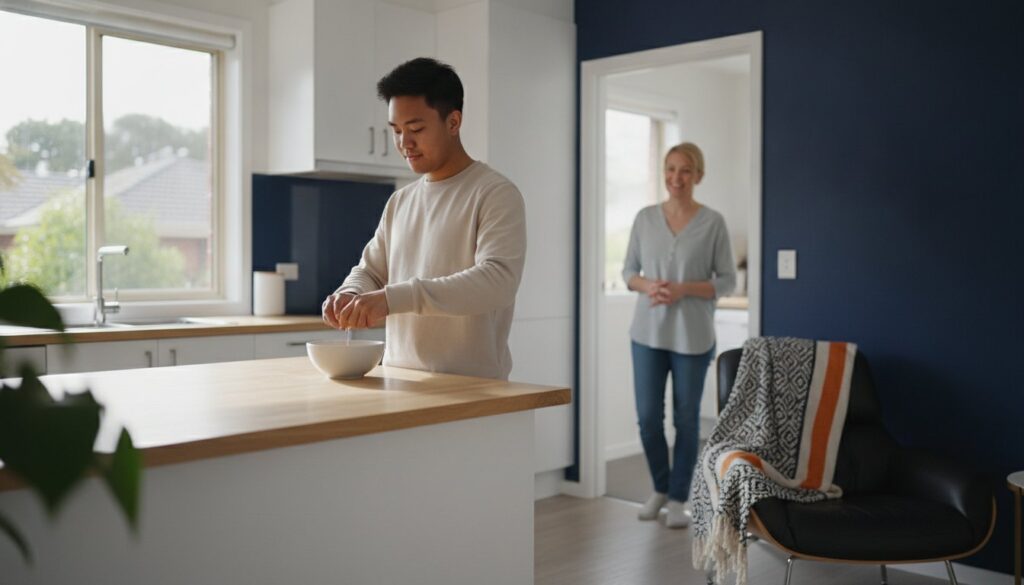
Only 10% of young autistic adults in Australia live independently from their parents. For many Melbourne families, this isn’t due to a lack of ambition, but a lack of environments like SIL homes for adults with autism Melbourne that truly understand neurodivergent needs. You likely feel the weight of this reality every day. It’s a quiet anxiety. You worry that a generic group home might misunderstand their unique requirements or disrupt the delicate routines you’ve spent years building.
We believe moving out shouldn’t mean moving away from safety. This guide explores how specialised living environments provide a steadying influence through sensory-safe design and professional care. You’ll discover how the right structure fosters autonomy, what to look for in a sensory-friendly home, and how to secure a future where your loved one thrives with dignity and quiet confidence.
Key Takeaways
- Learn why neuro-affirming design is the foundation of a successful transition, moving beyond basic care to create a home that respects specific sensory needs.
- Discover how to evaluate SIL homes for adults with autism Melbourne by looking for environments that prioritise consistent routines and social compatibility.
- Understand the role of location in long-term stability, balancing the need for quiet, sensory-friendly spaces with opportunities for local community participation.
- Explore how a “steady hand” approach to support helps participants develop life skills and autonomy without stripping away their independence.
What Makes SIL Homes for Adults with Autism in Melbourne Different?
Routine is the anchor. For those seeking SIL homes for adults with autism Melbourne, the traditional model of care is shifting toward neuro-affirming support. This means acknowledging that a person’s environment directly impacts their capacity to learn. Supported living in 2026 isn’t just about a roof and a bed; it’s about a structured framework that respects individual sensory profiles. While generic group homes often focus on physical safety, autism-specific SIL prioritises cognitive and sensory comfort to prevent burnout.
NDIS funding for SIL covers the essential background support that makes independence possible. This includes 24/7 onsite assistance, meal preparation, and the development of daily life skills. Having a steady hand available around the clock is vital for managing complex sensory requirements or unexpected changes in routine. It ensures that help is there when needed, without being intrusive.
The Importance of Sensory-Friendly Living Spaces
A home should be a sanctuary, not a source of stress. In Melbourne, specialised SIL homes are designed with low-arousal principles in mind. We consider everything from the hum of the fridge to the warmth of the lighting. Dimmable LEDs, sound-absorbing materials, and neutral colour palettes help reduce the constant noise of the environment. Sensory regulation is the foundation of a successful SIL placement.
Creating “Safe Zones” in Shared Accommodation
Shared living requires balance. Each participant needs a dedicated safe zone where they can retreat and decompress without interruption. These private spaces allow for total control over sensory input, ensuring that social interaction remains a choice rather than an obligation. This structure maintains dignity while fostering a sense of true ownership over one’s home.
Choosing the Right SIL Home in Melbourne Suburbs
Location is a primary consideration for long-term stability. In Melbourne, the choice often sits between quiet, green-filled suburbs and busier community hubs. While proximity to shops is helpful, a home near a park often provides a vital sensory “reset.” According to the National Disability Insurance Scheme (NDIS) definition of SIL, these supports focus on help within the home to build skills. For SIL homes for adults with autism Melbourne, the environment outside the front door is just as important as the support inside.
Social compatibility, or the “Housemate Match,” is the secret to a successful placement. It isn’t just about similar ages. It’s about sensory harmony. If one resident requires absolute quiet while another relies on auditory stimming, the environment becomes a source of stress. When visiting, ask staff about their experience with neuro-affirming care and how they manage sensory meltdowns. Finding the right SIL homes for adults with autism Melbourne involves more than a vacant room; it requires a commitment to social stability. For more context, our Supported Independent Living Melbourne guide offers a deeper look.
Navigating the Transition from the Family Home
Moving out is a significant milestone that deserves a gentle pace. We advocate for a phased approach. Trial stays allow the participant to test the sensory fit of the space without the pressure of a permanent move. This builds confidence slowly. Maintaining existing routines is also crucial. If a specific morning sequence works at the family home, it should be replicated in the SIL setting. This consistency provides a steadying influence during a time of change. Our guide on Assistance with daily life NDIS explains how these personal structures are upheld. If you’re unsure where to start, reaching out for a quiet chat can help clarify the path forward.

How WithCare Support Services Steady the Path to Independence
The focus is simple. We provide a steadying influence that respects personal boundaries while ensuring safety. Finding reliable SIL homes for adults with autism Melbourne requires more than just a vacancy; it requires a partner who understands the local landscape. Unlike national providers that might offer generic solutions, our approach is deeply rooted in the Victorian community, from the quiet streets of Tarneit to the established hubs of Geelong. We align our services with the Victorian Government supported accommodation options to ensure participants access high-quality, regulated environments. Choosing a dedicated NDIS provider Melbourne means partnering with a team that understands the specific nuances of our city’s suburbs and local transport networks.
Our care plans aren’t static. They evolve as confidence grows. For families searching for SIL homes for adults with autism Melbourne, this flexibility is vital. We provide the background structure needed for a fulfilling life without taking over the individual’s autonomy. It’s about being present but unobtrusive. We observe, we support, and we step back as the participant masters new aspects of their environment. This creates an atmosphere of dignity and quiet confidence that prioritises the human experience over administrative checklists.
Building Skills for a Self-Directed Life
Independence is a skill that can be nurtured. We focus on the development of life skills such as cooking, budgeting, and travel training. These aren’t just daily chores; they’re the building blocks of a self-directed life. By providing unobtrusive professional support, we empower participants to manage their daily routines with increasing ease. Confidence builds quietly. Through consistent practice and a reliable support system, the transition to living independently becomes a natural progression rather than a sudden hurdle. We ensure that every milestone is celebrated, reinforcing the participant’s right to lead a life that is both structured and personally fulfilling.
Securing a Future of Dignity and Independence
The path to independence is rarely a straight line. It’s a series of small, steady steps toward a life that feels both safe and self-directed. By prioritising sensory-friendly environments and careful social matching, families can find SIL homes for adults with autism Melbourne that offer more than just support; they offer a true sense of belonging. We understand that this transition is a significant emotional journey for everyone involved. As a registered NDIS provider with specialised autism support experience and deep Melbourne local expertise, we’re here to provide the structured, quiet confidence your loved one needs to thrive. You don’t have to navigate this transition alone. Enquire about our sensory-friendly SIL vacancies in Melbourne today and let’s discuss how we can support your family’s next chapter. A fulfilling, independent life is within reach.
Frequently Asked Questions
What is the difference between SIL and SDA for autistic adults?
SIL refers to the person-to-person support services provided within a home, such as help with cooking, cleaning, or personal care. Specialist Disability Accommodation (SDA) is the physical building itself, designed for those with high support needs. Many residents in SIL homes for adults with autism Melbourne receive daily support while living in a standard rental property rather than a specialised SDA building.
Can my child stay in their current Melbourne suburb while moving into SIL?
Maintaining local connections is often a priority to ensure a smooth transition. We support participants across Tarneit, Geelong, and the wider Melbourne area. Staying in a familiar suburb helps preserve established routines and proximity to known healthcare providers. If a vacancy isn’t available in your exact street, we prioritise finding a nearby home that offers a similar sensory environment and community access.
How does the NDIS determine the level of SIL funding for autism?
Funding levels are determined by the NDIS through an assessment of the participant’s daily support requirements. They look at evidence from therapists and specialists to decide how much assistance is “reasonable and necessary” for safe living. This process considers the need for 24/7 supervision, help with personal care, and support for social participation. The focus is always on providing a steady, reliable framework for independence.
What happens if my child doesn’t get along with their SIL housemates?
Housemate compatibility is essential for a calm environment. We use a careful matching process, but we also have protocols if relationships become strained. Initially, we provide mediation to help residents navigate social challenges. If a situation doesn’t improve, we work with you to find a more suitable environment. Stability in SIL homes for adults with autism Melbourne depends on everyone feeling comfortable in their shared space.