
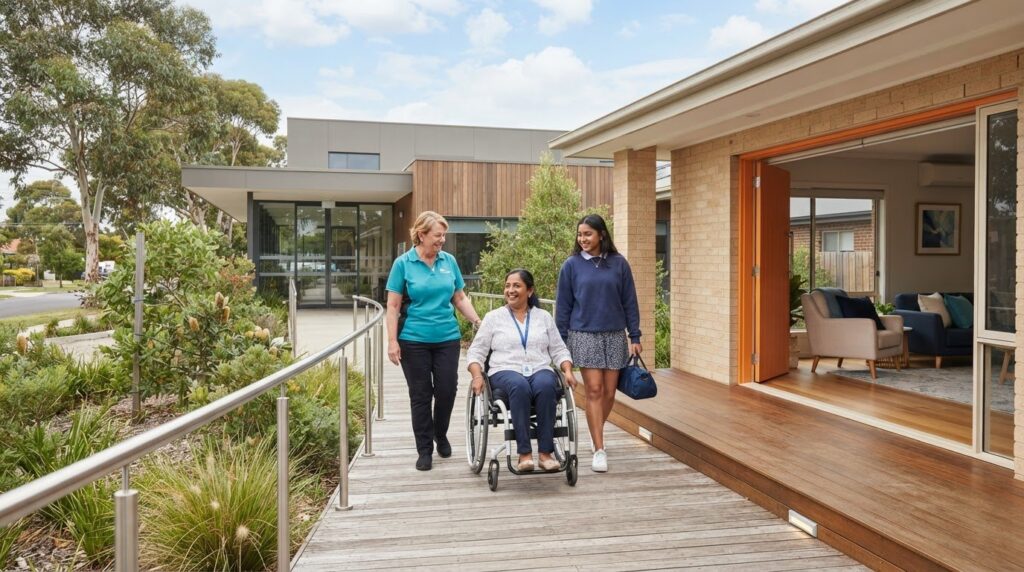
A discharge date does not mean everything is ready at home. For families transitioning from hospital to home with NDIS support VIC, the key questions are often whether suitable accommodation and disability supports will be in place, and which NDIS legislative changes apply to the participant. A steadier move starts with the participant’s priorities, a clear picture of their support needs and early conversations with the hospital discharge team and relevant NDIS contacts.
This article sets out practical steps for involving the participant and their support people, checking current changes against official guidance and confirming arrangements before discharge. It also explains how WithCare Support Services’ Supported Independent Living, Supported Disability Accommodation, Community Participation and Development of Living Skills may relate to ongoing support at home. Suitability, funding and availability must be confirmed for each person. The focus is on clear planning and support that respects dignity and independence.
Key Takeaways
- For transitioning from hospital to home with NDIS support VIC, start with the participant’s preferences and discuss practical support needs with relevant hospital staff, informal supports and NDIS contacts.
- Check current official NDIS guidance to confirm which legislative changes apply to the participant. Don’t assume a change affects every plan or situation.
- Plan for continuity by discussing needs, confirming supports, agreeing on the handover and checking how arrangements are working after the person returns home.
- WithCare Support Services offers home and living supports that may suit ongoing needs. Confirm individual suitability, funding and current availability.
Hospital to home with NDIS in Victoria: first steps
Leaving hospital can bring practical questions into focus: will the person’s usual routines work at home, can they move through the space as needed, and what ongoing disability support may be required? For many individuals, in-home personal care services—such as those provided by Life’s Angel Home Care—illustrate how day-to-day assistance can help adults with disabilities maintain comfort and independence. These questions need a clear handover. The hospital team is responsible for clinical care and discharge decisions. Ongoing disability supports and provider services are separate matters to discuss with the participant, their support people and relevant NDIS contacts.
If you’re transitioning from hospital to home with NDIS support VIC, keep the participant’s preferences and confirmed needs at the centre of planning. A provider such as WithCare Support Services can discuss its available disability support and living options, but it does not replace the hospital discharge team or provide legal advice. The National Disability Insurance Scheme (NDIS) overview offers general background on the scheme, but it is not an official source for current rules.
How to verify which new NDIS legislative changes apply
Don’t assume a new rule applies to every participant or plan. Check current legislation, commencement information and participant guidance through official Australian Government NDIS sources. When you read about new NDIS legislative changes, check each claim against the relevant official source, including whether the change is in force and applies to the person’s circumstances.
If it is unclear whether a change applies, write down the question and ask the NDIA or the relevant NDIS contact to clarify before making support decisions. Keep legal questions separate from service discussions. WithCare Support Services can discuss whether its confirmed offerings may suit ongoing living needs, while suitability, funding and availability need to be confirmed for the individual. This helps families plan carefully without treating general information as a decision about a specific participant.
Plan a supported hospital-to-home transition in Victoria without losing continuity
A steady transition depends on shared decisions, not assumptions. Wherever possible, the participant should lead conversations, with relevant hospital staff, informal supports and NDIS contacts helping build a practical picture of what happens next. The NDIS guide to hospital stays can help structure discussions from admission through discharge.
- Discuss needs. Describe daily routines, tasks that may need support, access requirements at home and the participant’s preferences. Be specific: note whether entrances, bathroom access or moving between rooms need consideration.
- Plan the handover. Agree what information needs to be shared, who will communicate it and what support is expected when the person arrives home. Leave clinical discharge decisions with the hospital team, and clarify ongoing disability support arrangements separately with the relevant NDIS contacts and providers.
- Review after arrival. Check with the participant whether the agreed support fits their routines and preferences. Raise gaps or changes with the appropriate contacts rather than assuming the original plan covers every need.
What to clarify before leaving hospital
Make a short list of the person’s daily living needs, access requirements and support preferences. For physical home modifications—such as installing platform or stair lifts through Altitude Lifts—clarify practical installation timelines early. For each proposed arrangement, note who is responsible for confirming it and whether it is in place. If you’re transitioning from hospital to home with NDIS support VIC, also check whether any new NDIS legislative changes affect the person’s circumstances. Use current official sources and the participant’s NDIS contacts to verify this.
WithCare Support Services offers confirmed living and disability supports, but suitability and current availability need to be discussed for each person. Families can review WithCare Support Services’ living supports as one part of continuity planning.

How WithCare Support Services can fit into ongoing home support after discharge
Hospital discharge may mark the beginning of a different support routine, not the end of planning. WithCare Support Services offers Supported Independent Living, Supported Disability Accommodation, Community Participation and Development of Living Skills. These services may relate to ongoing living and participation needs, but suitability, current availability and NDIS funding must be confirmed for each person. Check official guidance and the participant’s plan details rather than assuming a particular support is funded.
Victoria’s Pathways to Home program is a government initiative described as supporting people with disability to return home from hospital. It is separate from a provider’s ongoing services and does not establish that a particular support or property is suitable for an individual.
Discuss home and living options with dignity and choice
Consider the participant’s preferences alongside practical access needs. Wyndham Vale Robust House has accessible entrances and exits, fully wheelchair-friendly layouts, purpose-built and certified designs, and customised accessible bathrooms. Wollert Robust House has accessible entrances and exits, fully wheelchair-friendly layouts, breakout and quiet rooms, and 24/7 professional support options. Geelong High Physical Property offers safe and secure environments, fully wheelchair-friendly layouts, purpose-built and certified designs, and community-focused living spaces. These features are specific to each property and do not establish current availability or individual suitability.
For families transitioning from hospital to home with NDIS support VIC, a conversation with WithCare Support Services can help clarify whether its confirmed home and living supports may align with the participant’s goals. This is a discussion about ongoing disability support, not clinical discharge care. Explore home and living support options and ask about current details, suitability and funding, keeping the participant’s choices central. These options may be relevant to people planning a return home in Melbourne, Geelong or Ballarat, but the suitability and availability of a specific property or support must be confirmed.
Take the next step towards a steadier move home
If you’re transitioning from hospital to home with NDIS support VIC, keep the plan person-led: clarify daily needs, confirm support arrangements and check which new NDIS legislative changes apply using current official guidance. Funding, eligibility and service availability depend on individual circumstances, so confirm them before relying on a particular arrangement.
WithCare Support Services offers home and living supports and has documented property options in Wyndham Vale, Wollert and Geelong. Features differ by property: Wyndham Vale Robust House includes customised accessible bathrooms; Wollert Robust House has breakout and quiet rooms; Geelong High Physical Property has community-focused living spaces. Discuss suitability and current availability for the individual.
The aim is support that respects choice and helps people feel valued, supported and free to live with dignity and independence. Discuss your home and living support needs with WithCare Support Services. You can also call 1300012725 or email info@withcaress.com.au to ask about next steps.
Frequently Asked Questions
What should I organise before transitioning from hospital to home with NDIS support in Victoria?
Before discharge, discuss the participant’s daily living needs, access at home, support preferences and likely routines with them, relevant hospital staff, informal supports and NDIS contacts. Confirm which supports are funded or otherwise available, who will provide them and whether arrangements are actually in place. Keep the hospital’s clinical discharge decisions separate from ongoing disability support planning, and resolve questions before relying on a proposed service.
Do the new NDIS legislative changes affect everyone transitioning home from hospital?
Don’t assume the new NDIS legislative changes affect every person in the same way. Applicability can depend on the change and the person’s circumstances, including their plan or stage in the NDIS process. Check current legislation, commencement information and guidance through official Australian Government NDIS sources. If it is unclear whether a change applies, seek confirmation from the NDIA or the participant’s relevant NDIS contact.
Can an NDIS provider arrange hospital discharge or clinical care?
An NDIS provider is not a substitute for the hospital team responsible for clinical care and discharge decisions. A provider may discuss its own disability supports for ongoing needs, but don’t assume it coordinates a hospital discharge or delivers clinical medical procedures. Clarify responsibilities with hospital staff, the participant’s NDIS contacts and any prospective provider, including which supports are confirmed for the move home.
How can Withcare Support services help after a hospital stay?
WithCare Support Services offers Supported Independent Living, Supported Disability Accommodation, Community Participation and Development of Living Skills. These may relate to a participant’s ongoing living or participation goals after discharge, but suitability, funding and current availability need individual confirmation. People in Melbourne, Geelong and Ballarat can ask about relevant options and property details. The provider’s role is ongoing disability support, not clinical discharge care.